+44 (0) 151 548 2211

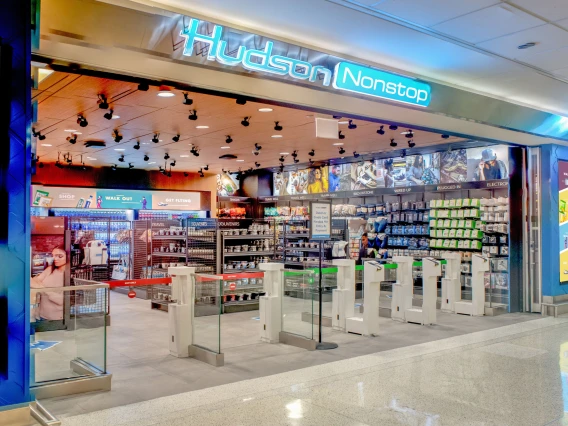
Food-to-go has always been about convenience. But even the quickest food offer can grind to a halt when everyone reaches the till at the same time.
That problem is particularly noticeable in busy locations such as stadiums, transport hubs and high-footfall retail stores, where large numbers of customers may want to buy food and drink within a very short window.
Frictionless retail is changing that experience. Instead of the traditional routine of choosing products, joining a queue and paying at a staffed checkout, frictionless stores use technology to remove some – or potentially all – of those stages.
For food-to-go, that opens up some interesting possibilities.
What is frictionless retail?
Frictionless retail is a broad term for technology and store design that removes unnecessary stages from the buying process.
Depending on the system being used, customers may enter a store using a payment card or app, select the products they want and simply leave. Cameras, sensors and other technology identify the items taken and payment is handled automatically.
Other formats may retain a payment point but use self-checkout, contactless payment or other systems to make the transaction considerably quicker.
The technology varies. The principle doesn’t: make buying something as straightforward as possible.
That makes it particularly relevant to food-to-go.
Why food-to-go is a natural fit
Someone buying a sandwich and a drink doesn’t usually want a lengthy retail experience. They know what they want, they want to find it quickly and they don’t want to spend longer queuing than they did choosing their lunch.
The same is true on a much larger scale at stadiums.
A traditional food and drink counter might suddenly have hundreds of people heading towards it during a short break in play. Serving every customer individually creates an obvious bottleneck, regardless of how efficiently the counter itself is operated.
A frictionless format changes the equation. Instead of concentrating customers around a small number of tills, the focus moves towards getting people to the products they want and allowing them to move through the store efficiently.
But removing the conventional checkout also puts much more responsibility on the rest of the retail environment.
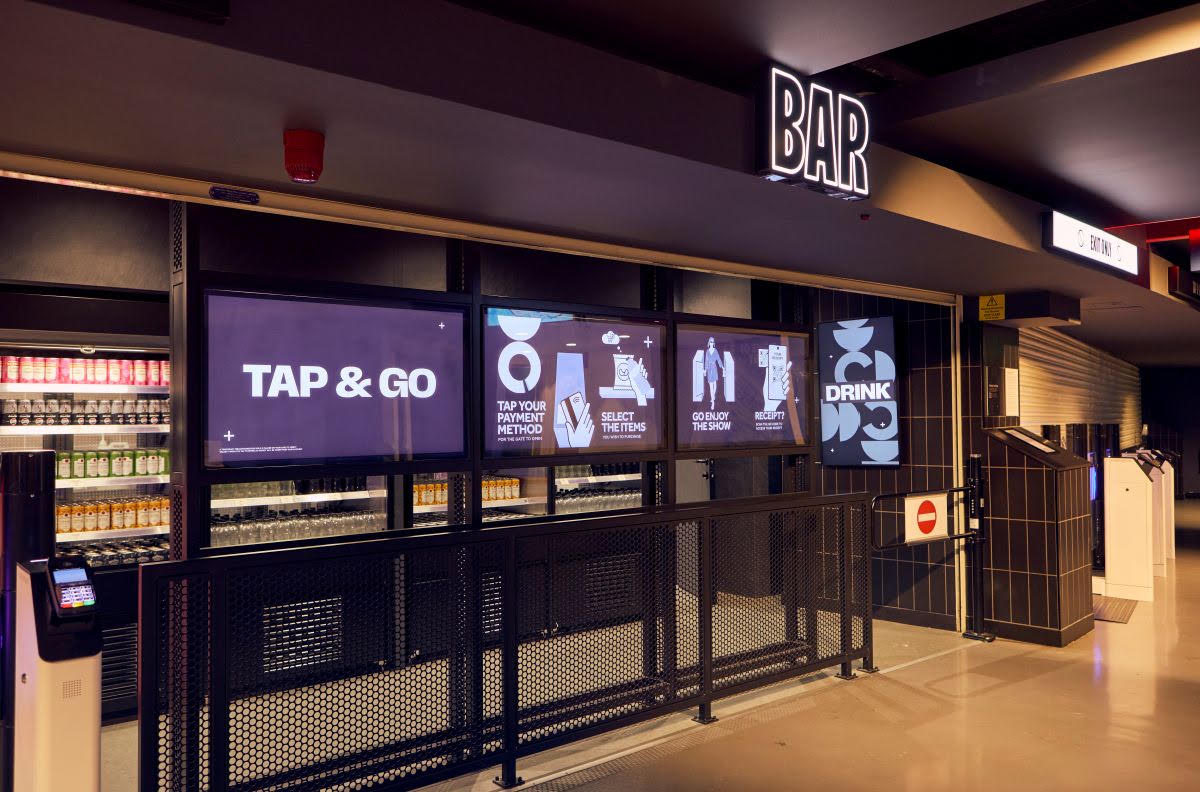
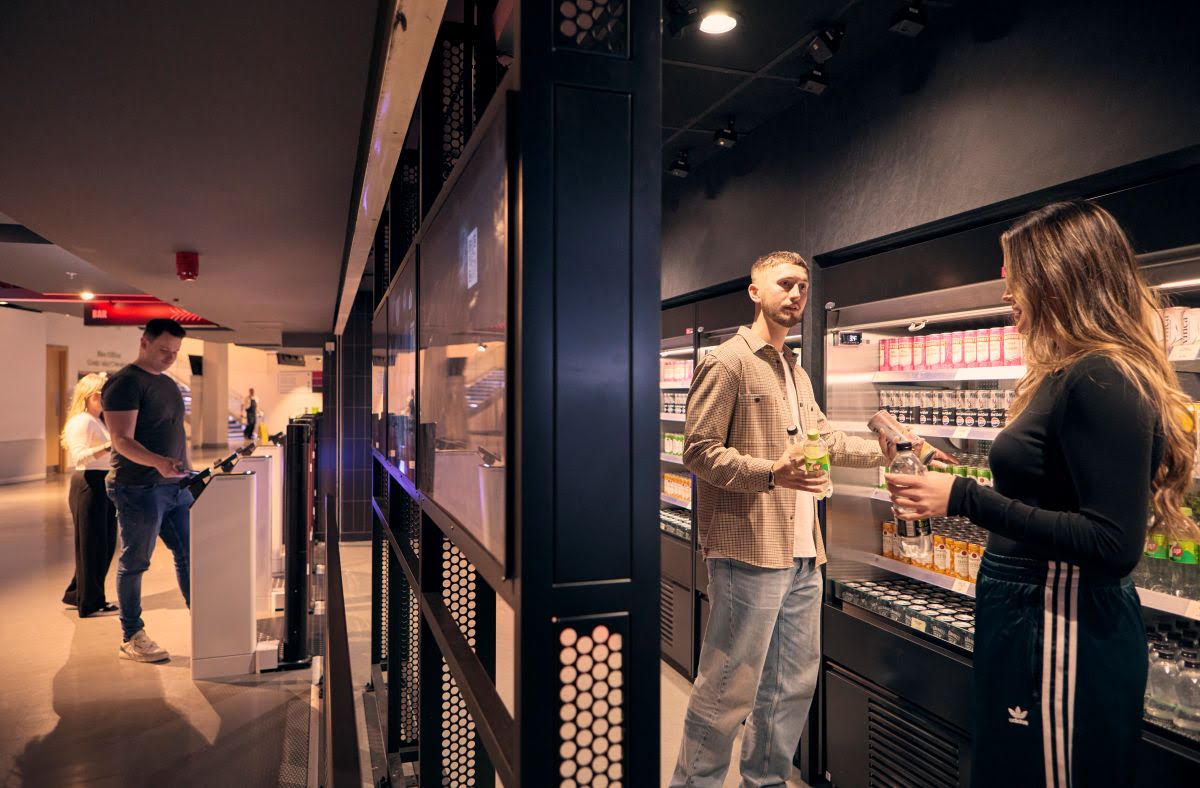
The shop still has to work
The technology behind frictionless retail understandably receives a lot of attention. Cameras, sensors and automated payments are the clever bit.
They aren’t the whole store.
Food still needs to be kept at the correct temperature. Products need to look appealing. Customers need to understand where to go. Displays have to cope with heavy periods of demand and staff need to be able to replenish them efficiently.
If someone enters a checkout-free store and then struggles to find a drink, can’t see what’s available or has to squeeze past other customers to reach a refrigerated display, the experience isn’t particularly frictionless.
That’s where the physical design of the food-to-go offer becomes important.
Grab, go and get back to what you were doing
In many ways, frictionless retail is pushing food-to-go towards its most straightforward form.
See it. Pick it up. Leave.
For that to work, food display equipment needs to make products immediately accessible.
Open-front refrigerated merchandisers are well suited to chilled food-to-go because customers can quickly browse sandwiches, salads, snacks and drinks without opening doors or waiting to be served. Heated self-service displays can do something similar for hot food.
Counterline’s iCapacity range, for example, includes open-fronted chilled and heated merchandisers designed for high-volume self-service environments.
In a frictionless setting, the display becomes an important part of the buying process. There may no longer be a member of staff behind a counter presenting the product or handing it to the customer. The equipment has to do much more of that work itself.
A different challenge for busy venues
Frictionless retail becomes particularly interesting when demand isn’t consistent throughout the day.
A convenience store may have a lunchtime rush. A transport location might see demand surge around arrivals and departures. Stadiums have an even more extreme version of the same problem, with potentially thousands of people wanting refreshments during a very narrow period.
In those situations, saving a few seconds on each transaction can become significant when multiplied across a large crowd.
It also changes the way operators can think about their food offer. Rather than designing everything around the number of staffed tills available, greater emphasis can be placed on display capacity, replenishment and the speed at which customers can select products.
That doesn’t mean traditional foodservice counters are disappearing. Different products and service styles require different approaches. But for pre-prepared food and drink, the grab-and-go model has an obvious appeal.
Where does food display equipment fit in?
As frictionless retail develops, the equipment around the technology has to develop with it.
Refrigerated, heated and ambient displays aren’t simply somewhere to put products. Their position, capacity, accessibility and appearance all affect how easily customers can move through the store.
A successful frictionless food-to-go environment therefore needs the technology and physical retail space to work together.
And that’s perhaps the biggest change.
The checkout used to be one of the defining features of a shop. Take it away and attention shifts elsewhere – towards the products, the displays and the route customers take between entering and leaving.
For food-to-go operators, that’s an opportunity to rethink what a quick purchase can actually look like.
Talk to Counterline About Frictionless Food-to-Go
Counterline is already working on food display solutions for frictionless retail projects across shops, stadiums and other high-footfall environments, bringing refrigeration, heated displays and self-service equipment into modern grab-and-go spaces.
If you’re planning a frictionless retail project or looking at ways to improve an existing food-to-go offer, contact Counterline to discuss the display equipment that could work for your space.