+44 (0) 151 548 2211

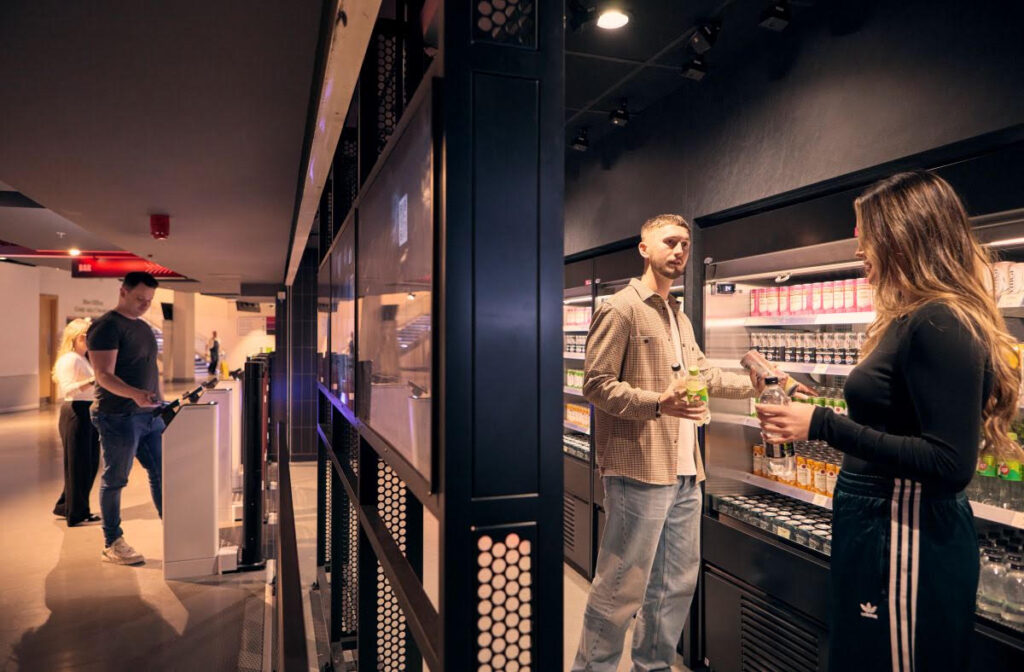
Half-time presents a familiar problem for stadium catering operators. Thousands of supporters leave their seats, head towards the concourse and want food or drink before play resumes.
The window for serving them is remarkably short.
Even a well-organised catering operation can struggle when so many customers arrive at once. Queues build, staff work under pressure and some supporters decide that buying refreshments simply isn’t worth missing part of the match.
It’s a challenge that frictionless retail is beginning to address, with checkout-free stores appearing at major sporting and entertainment venues across the UK.
Why Is Stadium Catering So Difficult to Manage?
Unlike a high street café or convenience store, stadium catering rarely benefits from a steady flow of customers.
Demand arrives in waves.
At a football ground, the busiest period is often half-time. At an entertainment arena, it might be immediately before a performance or during an interval.
Operators have to prepare for these surges while maintaining an efficient service throughout the rest of the event.
Traditional catering counters have a natural limitation: every transaction takes time. Customers place orders, collect products and complete payment before the next person can be served.
Additional staff and payment terminals can improve matters, but they don’t eliminate the underlying bottleneck.
Frictionless stadium catering offers a different approach by allowing customers to collect food and drink without stopping at a conventional checkout.
Removing the Checkout From the Customer Journey
In a fully checkout-free store, customers typically enter using a payment card or another authorised method, select their products and leave.
The technology identifies the items taken and processes payment automatically.
For supporters, the appeal is straightforward. They can collect refreshments without joining a traditional till queue.
For stadium operators, the potential benefit is greater customer throughput during busy periods.
Of course, removing the checkout doesn’t mean removing every possible delay. Customers still need room to browse, displays must remain stocked and the store needs to be organised so people can move through it comfortably.
But taking individual payment transactions out of the process can remove a significant source of congestion.
Making Better Use of Stadium Catering Space
One of the less obvious benefits of frictionless retail is the opportunity to reconsider how catering space is used.
Traditional kiosks need room for service counters, payment terminals and customers waiting to be served.
Checkout-free formats can place greater emphasis on accessible product displays and clear routes through the store.
That doesn’t necessarily mean every frictionless installation requires less floor space. The technology, entrance arrangements and customer capacity all influence the final design.
However, it does give operators an opportunity to rethink how the available space is organised.
A refrigerated display positioned for quick customer access may become more useful than a traditional counter arrangement built around individual transactions.
The aim is to make it easy for several customers to select products simultaneously without obstructing one another.

Utilita Arena Birmingham: Frictionless Retail in Action
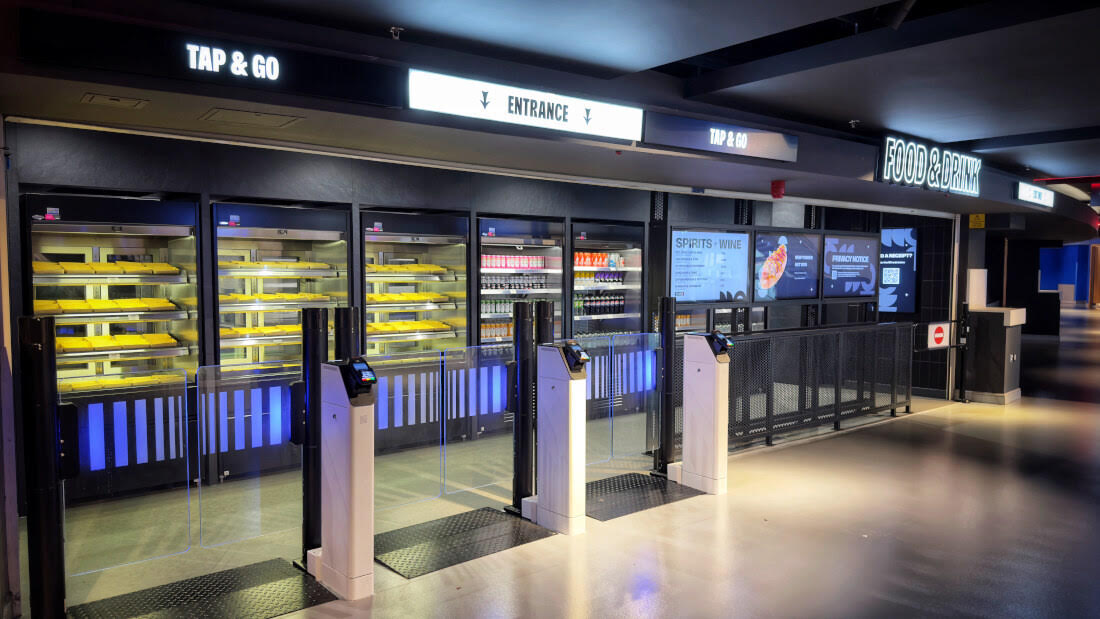
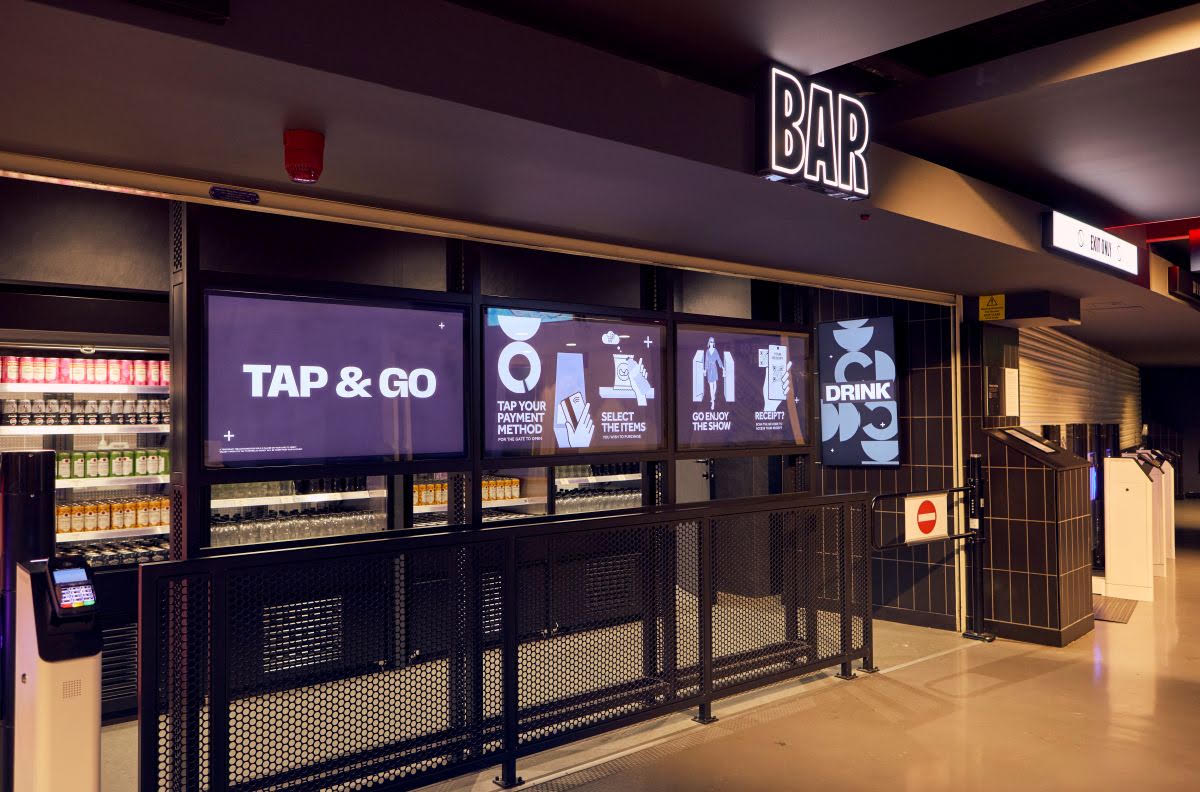
The introduction of six frictionless kiosks at Utilita Arena Birmingham provides another example of this approach.
Powered by Amazon Just Walk Out technology, the development forms part of Levy UK’s partnership with the NEC Group.
Working alongside RDA, which managed the design development and phased construction, Counterline supplied iCapacity display equipment to support the venue’s new grab-and-go offering.
Customers can enter the kiosks, select their food and drink and leave without using a traditional checkout.
An interesting aspect of this project is that the installation was completed across three construction phases without the loss of any trading days.
For a busy entertainment venue, maintaining operations while introducing new catering facilities is an important practical consideration.
The Utilita Arena Birmingham Express Bar case study explores Counterline’s involvement in the project.
What Happens to Staffing in a Frictionless Store?
Removing conventional checkout transactions doesn’t remove the need for catering staff.
In fact, other parts of the operation become even more important.
Someone still needs to replenish refrigerated displays, monitor product availability, maintain food safety standards and keep the retail environment clean.
During a busy interval, stock can disappear from shelves quickly. If customers enter a frictionless store only to discover that popular drinks or snacks have sold out, the advantages of checkout-free technology become less convincing.
Staffing arrangements can therefore place greater emphasis on keeping the store operational rather than processing every individual purchase.
This may allow operators to use their teams differently, although the staffing requirements will depend on the venue, technology and product range.
The equipment itself also matters. Displays need sufficient capacity for busy periods while remaining accessible for replenishment and routine maintenance.
Can Frictionless Retail Increase Stadium Food and Drink Sales?
There is a clear commercial argument for reducing the time it takes supporters to purchase refreshments.
Long queues can discourage customers from buying anything, particularly when they’re worried about missing the start of the second half.
Making purchases quicker and more convenient could encourage more supporters to use stadium catering facilities.
However, frictionless retail doesn’t automatically guarantee increased sales.
Operators still need an appealing product range, suitable pricing, sufficient stock and a store that customers can navigate easily.
The most useful measures of success include how many customers can be served during peak periods, how reliably products remain available and whether the overall experience encourages people to purchase.
Checkout-free technology can address one part of the challenge, but the surrounding catering operation has to support it.
The Role of Food Display Equipment in Stadium Catering Efficiency
With customers collecting products independently, food display equipment takes on a more prominent role.
There may be no member of staff presenting each item or handing over an order. Products need to be visible, accessible and maintained at suitable temperatures throughout service.
Counterline’s iCapacity range includes chilled and heated merchandisers designed for high-volume food-to-go environments.
Open-fronted displays allow customers to browse and collect pre-packaged food and drink directly, making them particularly relevant to grab-and-go retail.
Choosing the correct equipment also involves considering display capacity, product visibility, replenishment and compatibility with the wider store design.
Planning a Frictionless Stadium Catering Project?
Frictionless retail is creating new possibilities for stadium catering, particularly where large numbers of customers need refreshments within a limited period.
Checkout-free technology can help reduce conventional payment queues, but the equipment surrounding it remains essential to the operation.
Counterline has experience supplying heated, chilled and self-service food display equipment for major stadium and arena projects, working alongside catering operators, contractors and technology partners.
Looking to introduce frictionless retail or improve your stadium’s food and drink facilities? Contact Counterline to discuss the display equipment requirements for your next project.