+44 (0) 151 548 2211

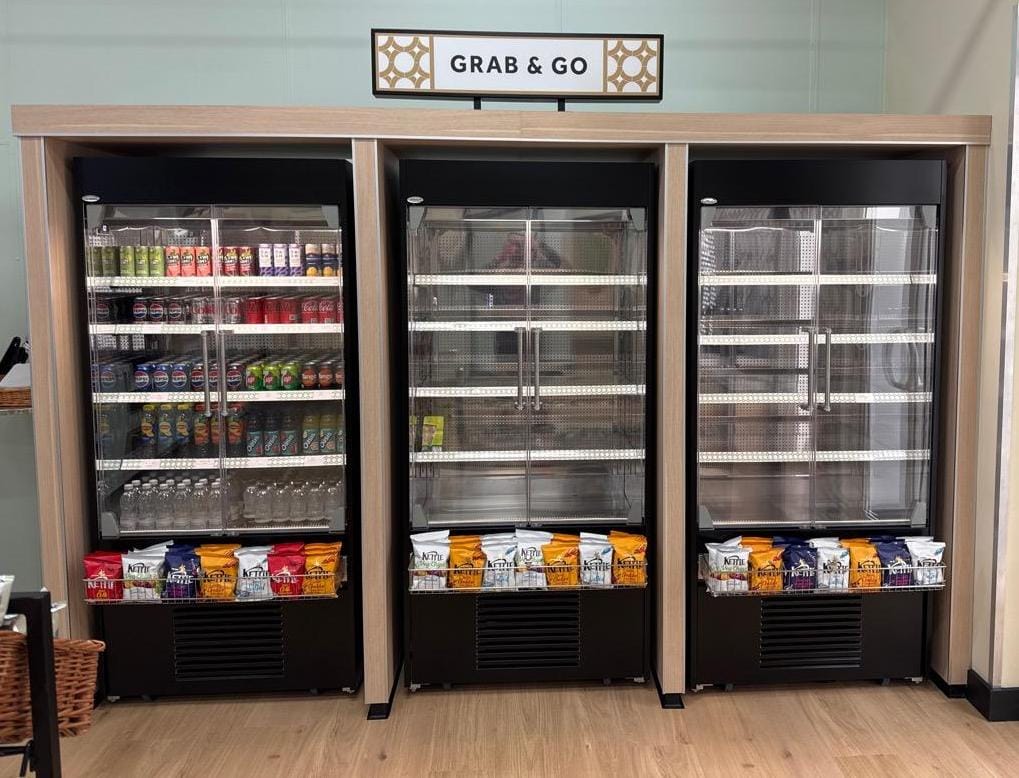
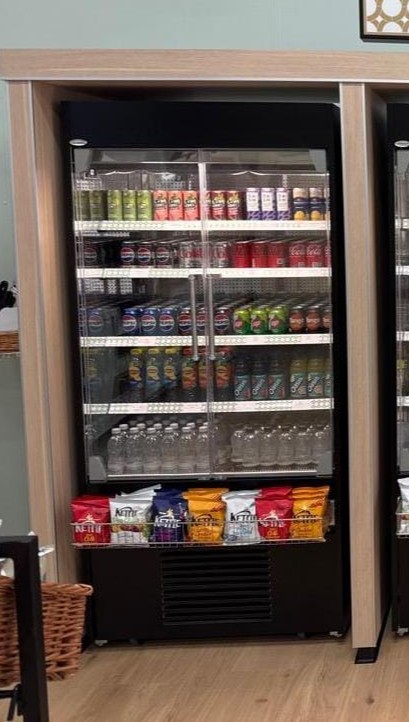
If you’ve walked into any modern food-to-go space recently, you’ve probably noticed a shift happening. More retailers, cafés, and workplace dining areas are moving towards glass door fridges rather than traditional open front multidecks.
The reason is fairly straightforward: energy usage.
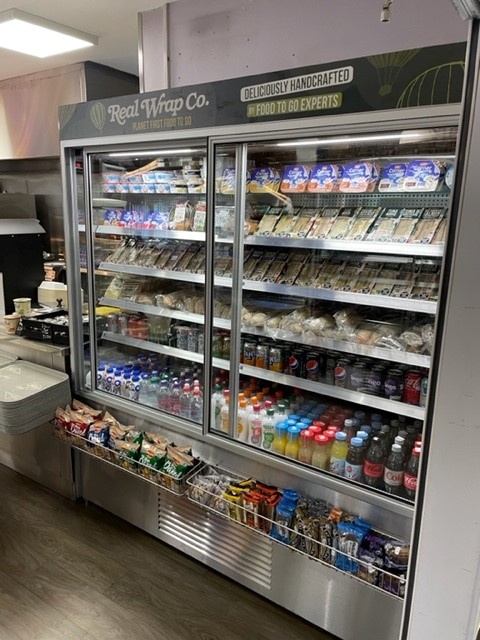
With electricity costs still high, refrigerated displays are under more scrutiny than ever. Open front multidecks remain popular because they’re easy to access and great for fast-paced environments, but many operators are now weighing that convenience against running costs.
So, are glass door fridges actually more energy efficient? In most cases, yes — but it depends on how the space is being used.
Why open front multidecks use more energy
Open front multidecks constantly lose chilled air into the surrounding environment. That means the refrigeration system has to keep working to replace it and maintain temperature.
You’ll usually notice this more in:
- Warm retail environments
- Busy entrances or walkways
- Sites with long operating hours
- High-footfall food-to-go areas
Even with modern airflow technology, an open cabinet still has to work harder than a closed one.
That doesn’t mean open front displays are bad — far from it. They’re still incredibly effective in fast-moving retail spaces because customers can grab products quickly without stopping to open doors.
Where glass door fridges come into their own
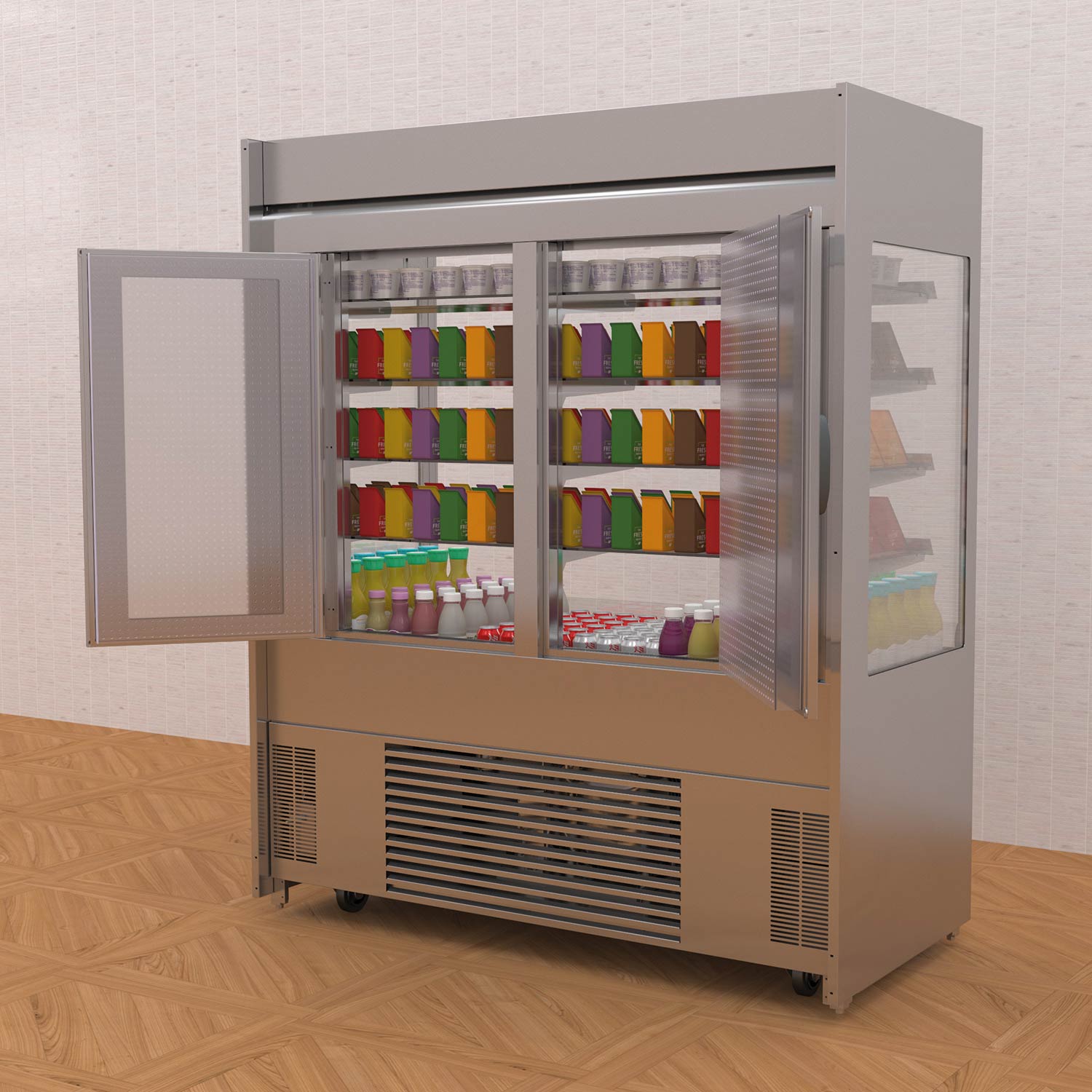
A glass door fridge keeps cold air contained inside the cabinet for much longer. The refrigeration system doesn’t need to compensate for constant air loss, which generally improves efficiency and lowers energy consumption over time.
There are a few other advantages too:
- More stable temperatures
- Better performance in warmer environments
- Reduced strain on compressors
- Lower long-term running costs
- Improved overnight temperature retention
For operators looking closely at sustainability and energy use, those savings can add up surprisingly quickly.
But energy efficiency isn’t the whole story
One thing that often gets missed in these conversations is customer behaviour.
Open front multidecks are popular because they encourage quick purchases. In grab-and-go environments, reducing barriers matters. If somebody can immediately pick up a drink, sandwich, or salad without opening a door, they’re more likely to buy impulsively.
That’s why many modern foodservice environments now use a combination of both:
- Open front multidecks in high-speed areas
- Glass door fridges where energy performance matters more
It’s less about one being “better” than the other and more about using the right display in the right location.
Temperature consistency matters too
From a food safety point of view, maintaining stable chilled temperatures is essential.
Glass door fridges often make this easier because external air has less impact on the internal cabinet temperature. That can be particularly useful for:
- Fresh sandwiches
- Dairy products
- Prepared meals
- Desserts
- Premium grab-and-go products
Consistent refrigeration also helps maintain product quality throughout the day, especially during busy service periods.
How Counterline approaches refrigerated displays
At Counterline, refrigerated displays are designed around both presentation and performance. In real foodservice environments, chilled displays need to do more than simply keep products cold — they also need to work as part of the wider servery and customer experience.
Counterline’s chilled display systems are commonly integrated alongside:
- Heated merchandisers
- Bain maries
- Ambient counters
- Food-to-go serveries
The aim is to create a clean, efficient service line that supports both operators and customers.
You can explore Counterline’s refrigerated display options here.

Questions people often ask about glass door fridges
Are glass door fridges cheaper to run?
Generally, yes. Because cold air remains inside the cabinet for longer, the refrigeration system usually works less compared with open front displays.
Do glass door fridges affect sales?
Not necessarily. While open front units can encourage impulse purchases, many modern glass door fridges are designed with excellent visibility and lighting to maintain strong product presentation.
Are open front multidecks still worth using?
Absolutely. They still work extremely well in fast-paced retail and grab-and-go environments where accessibility is important.
Which option is better for food-to-go?
It depends on the environment. Many operators now use both — open front displays for speed and accessibility, with glass door fridges used where energy efficiency and temperature stability are higher priorities.
Choosing the right chilled display
The best refrigerated display setup usually comes down to balancing three things:
- Energy efficiency
- Customer convenience
- Product presentation
For some sites, reducing electricity usage will be the priority. For others, speed of service and impulse purchasing may matter more.
That’s why refrigerated display design is rarely one-size-fits-all.
If you’re planning a new foodservice area or refurbishing an existing line, Counterline can help specify chilled display solutions that suit both the space and the way customers actually use it. Contact us today!